
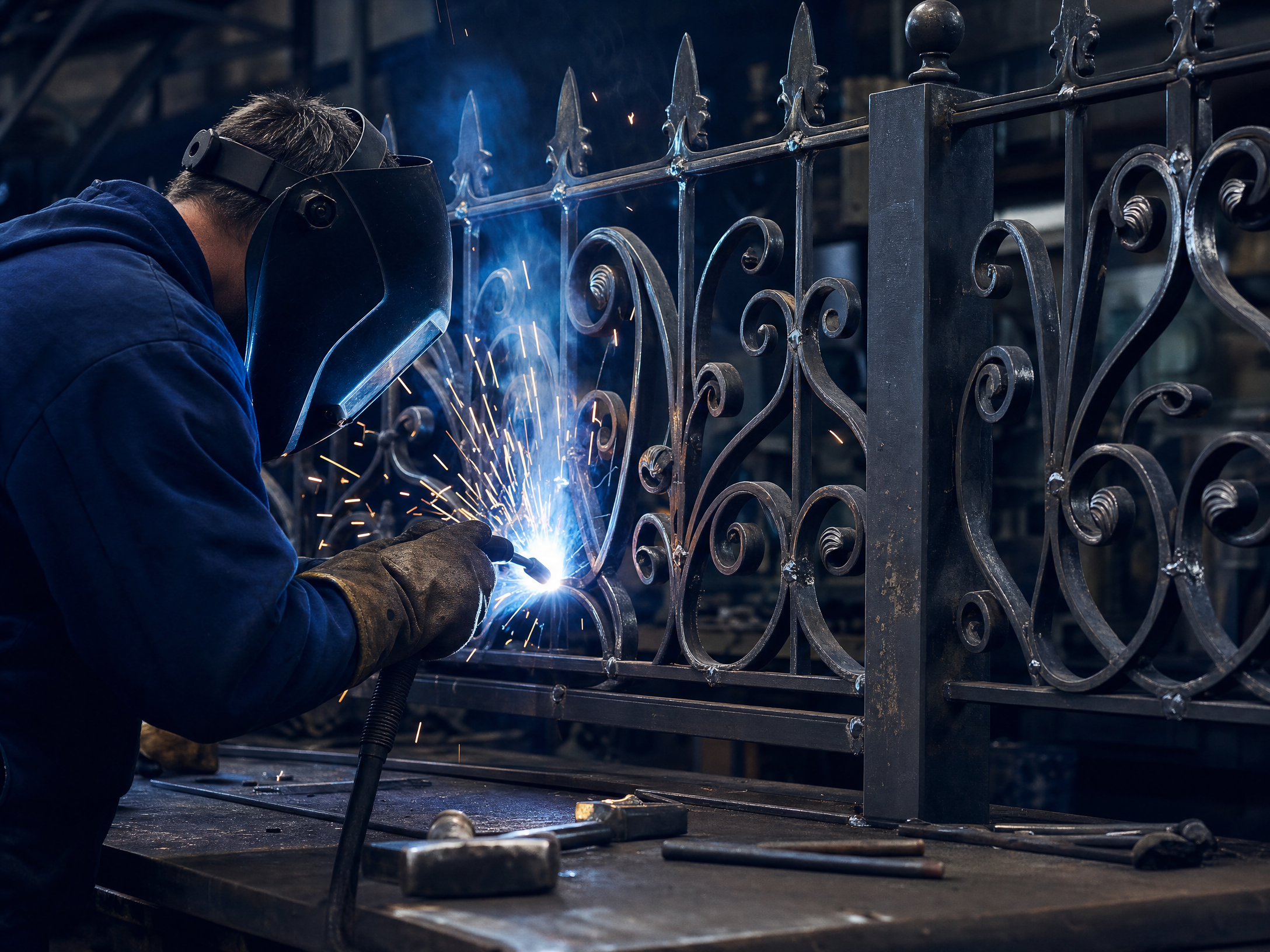
If you've ever watched your neighbor's wooden fence literally split apart during a 115-degree Tucson summer, you already know that Arizona's extreme heat destroys fences faster than almost anywhere else in the country. The combination of intense UV radiation, temperature swings from 40°F winter nights to 110°+ summer days, and violent monsoon winds creates a perfect storm of fence destruction.
The best fence material for Arizona heat is ornamental iron or steel, lasting 20-30 years with minimal maintenance. Aluminum runs a close second at 15-25 years. Chain link survives 10-20 years if galvanized and vinyl coated. Premium vinyl fencing holds up 10-15 years if specifically rated for desert climates. Wood fences struggle most, typically needing replacement after 5-10 years even with regular sealing.
How Arizona's Climate Destroys Fences Faster Than Other Regions
Southern Arizona's desert climate hits fences with three brutal forces that most homeowners underestimate. First, our UV index regularly hits 11+ (extreme) for five months straight. That's equivalent to leaving your fence under a magnifying glass.
Second, the temperature differential creates constant expansion and contraction. When your fence experiences a 70-degree temperature swing in 24 hours (45°F at dawn to 115°F by afternoon), materials literally tear themselves apart at the molecular level.
Third, monsoon season brings 60+ mph microbursts that can rip panels clean off posts. These aren't gradual hurricane winds – they're sudden walls of dust and debris that slam fences without warning.
Metal Fencing: Why Iron and Aluminum Dominate Desert Properties
Ornamental Iron and Steel Fencing
Walk through any established Tucson neighborhood like Sam Hughes or Catalina Foothills, and you'll notice the 30-year-old wrought iron fences still standing strong. Modern galvanized steel with powder coating performs even better. We build custom iron and steel fences for homes across Tucson, and our corrugated metal fence guide covers the privacy option in steel.
Iron and steel excel because metal conducts heat without degrading. While a steel fence in Phoenix might reach 140°F surface temperature, the molecular structure remains unchanged. Compare that to vinyl, which starts warping at 160°F – a temperature black vinyl easily hits.
The main drawback? Initial cost runs $25-40 per linear foot installed for quality residential fencing. But when you amortize that over 25+ years versus replacing wood every 7-10 years, metal actually costs less long-term.
Aluminum Fencing Benefits
Aluminum offers 90% of steel's durability at 70% of the weight. This matters during installation and if you ever need fence repair services after storm damage. Aluminum won't rust even if the powder coating chips, making it ideal for pool enclosures where chlorine exposure accelerates corrosion.
Expect 15-25 years from quality aluminum fencing with virtually zero maintenance beyond occasional hosing off dust.
Does Vinyl Fencing Work in Arizona Heat?
Here's where manufacturers and reality diverge. Yes, modern vinyl fencing includes UV inhibitors and titanium dioxide to resist fading. But Arizona's UV intensity overwhelms most formulations within 5-7 years.
The bigger issue? Thermal expansion. A 6-foot vinyl panel expands nearly half an inch between winter and summer temperatures. Those expansion joints you see? They're working overtime here, and eventually fail.
If you choose vinyl, look for these specific features:
- Virgin vinyl (not recycled) with 12+ parts titanium dioxide
- Impact modifiers rated for temperature extremes
- Manufacturer warranty explicitly covering Southwest installations
- Light colors only (white, tan, gray) – dark colors absorb too much heat
Even premium desert-rated vinyl typically needs replacement after 10-15 years, making them less economical than metal despite lower upfront costs.
Chain Link: The Budget Survivor
Don't dismiss chain link fencing for purely aesthetic reasons. Galvanized chain link with vinyl coating handles Arizona conditions surprisingly well for the price point.
The open weave design eliminates wind resistance problems that destroy solid panel fences during monsoons. Air flow also prevents the extreme temperature buildup that damages vinyl.
Modern black or green vinyl-coated chain link looks far better than bare galvanized and adds 5-10 years to the lifespan. Expect 15-20 years from quality vinyl-coated chain link, or 10-15 years from standard galvanized.
Why Wood Fences Fail Fast in the Desert
Wood remains popular for its natural beauty and lower initial cost, but it's arguably the worst choice for our climate. Even pressure-treated pine or cedar faces these problems:
Moisture content swings from 2% in June to 15% during monsoons cause constant shrinking and swelling. Boards literally pull themselves off rails. UV rays break down lignin (wood's natural glue), turning surfaces gray and brittle within two years without constant sealing.
Termites love irrigated wood in the desert. One tiny irrigation leak near a fence post creates a termite highway. By the time you notice damage, entire sections need replacement.
If you insist on wood, budget for annual sealing ($200-400 for typical yards) and expect full replacement within 7-10 years. Cedar lasts slightly longer than pine but costs nearly double. Our wood, vinyl and metal comparison puts the three materials side by side.
How Do Different Materials Handle Monsoon Winds?
According to National Weather Service Phoenix data, Tucson averages 30+ days annually with damaging winds over 40 mph. Fence wind resistance depends on two factors: panel solidity and connection strength.
Open designs (chain link, ornamental iron) allow wind to pass through, dramatically reducing stress on posts. Solid panels (wood, vinyl) act like sails. A 6-foot vinyl privacy fence faces 330 pounds of force in 70 mph winds – enough to snap posts not properly anchored.
Steel posts set 36 inches deep in concrete handle these loads. But many commercial fencing contractors only go 24 inches for residential work, creating failure points.
Frequently Asked Questions
What fence material requires least maintenance in Arizona?
Powder-coated aluminum and galvanized steel require virtually zero maintenance beyond occasional cleaning. No painting, sealing, or replacement parts needed for 15-25+ years. Chain link runs second, needing only occasional tightening. Wood and vinyl both require regular maintenance or replacement.
Can composite fencing handle Arizona heat?
Composite fencing performs better than pure wood but worse than metal. Quality composites with high plastic content and UV inhibitors last 10-15 years. Cheaper composites fade and become brittle within 5-7 years. The plastic component makes them vulnerable to extreme heat warping.
How much does heat-resistant fencing cost in Tucson?
Installed costs in 2026 average: Chain link $8-15 per linear foot, Wood $12-25, Vinyl $20-35, Aluminum $25-35, Ornamental iron $25-45. Remember to factor replacement frequency – spending more upfront on metal often costs less over 20 years.
Does fence color affect heat resistance?
Absolutely. Dark colors absorb more heat, accelerating material breakdown. Black vinyl can reach 180°F surface temperature, while white stays under 120°F. For any non-metal material, choose white, tan, or light gray to maximize lifespan.
What about concrete or masonry walls instead of fencing?
Block walls handle heat exceptionally well but cost $40-60 per linear foot installed. They also require deeper footings, engineering permits for heights over 6 feet, and don't allow airflow. Many HOAs prohibit solid walls facing streets.
Local Considerations for Tucson Area Fence Installation
Different areas around Southern Arizona present specific challenges. Properties near the Rincon or Catalina mountains face higher wind speeds. Homes in Oracle or Sonoita at higher elevations see greater temperature swings.
Soil composition matters too. Caliche layers common in our service areas require special equipment to dig proper post holes. Sandy washes need wider concrete footings to prevent monsoon washouts.
The EPA's climate data shows Arizona temperatures rising faster than the national average, with 15 more 110°+ days expected by 2050. Fences installed today need materials rated for even more extreme conditions than current averages suggest.
Smart Features That Extend Fence Life in Heat
Small design choices make huge differences in fence longevity. For automatic gates, choosing dual-swing over sliding reduces motor strain from thermal expansion.
Post caps prevent water intrusion during monsoons while adding minimal cost. Metal posts filled with concrete resist internal corrosion better than hollow posts.
For any fence type, leaving 1/4-inch gaps between boards or panels allows thermal expansion without buckling. Too many installers butt materials tight, guaranteeing problems.
Making Your Final Decision on Desert-Proof Fencing
Choose your fence material based on three factors: budget timeline, aesthetic requirements, and maintenance tolerance. If you plan to stay 10+ years, metal fencing pays for itself. Moving soon? Chain link offers decent protection without breaking budgets.
Privacy needs push you toward vinyl or wood initially, but consider ornamental iron with mesh inserts or climbing vines for longer-lasting privacy solutions.
Ready to invest in fencing that actually survives Arizona's brutal summers? Gama Fence specializes in metal fabrication and desert-rated fence materials proven to handle whatever our climate throws at them. Contact us for a free consultation to explore which heat-resistant fencing solution fits your specific property needs and budget.
Ready to Get Started?
GET A FREE ESTIMATE FROM GAMA FENCE
Serving Tucson and all of Southern Arizona. ROC Licensed #316344.